
A Wrinkle in Theory : A Look Into Time Travel
by Clover LaMorgese
Time travel is one of science fiction's favorite subjects, but this claim makes a statement that time travel is science fiction. However, in reality, physics, Newton’s 1st law of motion, and other studies may beg to differ. That's right, folks! Time travel is hypothetically feasible! Now that we got that out of the way, let's get into the basics of time travel — which, it must be confessed, are still incredibly complicated.
DISCLAIMER: Time travel WILL NOT be achievable in our lifetime. In fact, we may never achieve it, but science shows us how we could - in theory. We also cannot travel to the past so if you're gone, you're gone for good. Another thing you should be aware of is that this article, like many others on this topic, will raise more questions than answers.
Let's get started!
Before we look at how time travel is possible, I think it’s best to show the kind you’re probably most familiar with. The idea of time travel via machine was first shown in H. G. Wells 1895 story, The Time Machine. Many science fiction stories that feature time travel focus on the consequences and paradoxes of traveling to the past or future. For example, the “grandfather paradox” provides the example of a man who travels back in time and causes the death of his grandfather, but then the grandson wouldn’t be alive and able to kill the grandfather, thus, the creation of a paradox. Of course these stories are not accurate pieces of scientific work; they are called science fiction for a reason, after all. If we want to be more realistic about time travel, Albert Einstein laid the groundwork for the idea of it from his theory of relativity in 1905 and 1915.
For the rest of this article, I’ll focus on a more scientific approach, so I will simply say that – btw, you can still turn back – time travel isn’t actually time travel. Time travel is actually just (remember, THEORETICALLY) an extreme case of time dilation, which is not theoretical. Time dilation is when time passes slower for someone or something moving very fast, or near a strong gravitational force, compared to someone or something standing still. So in theory, if we utilized time dilation to the extreme, then someone could go to the future while experiencing a slowing down of the aging process and they would therefore live longer. One little problem, though - it won’t add that much time. For example, astronauts that remained six months on the International Space Station aged only about 0.005 seconds less than they would have on Earth. The International Space Station moves at 17,200 miles per hour. Significant time dilation requires you to be nearly as fast as the speed of light to achieve any significant difference.
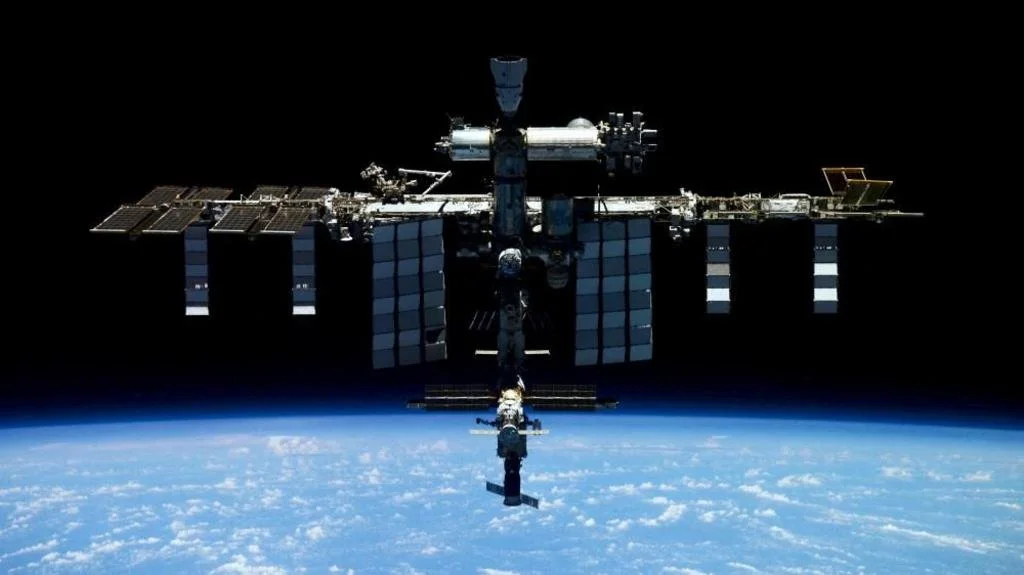
International Space Station
Now, you may still be iffy on the idea of time dilation so you’ll be happy to hear that there were several experiments on the concept The Hafele-Keating experiment took four cesium beam atomic clocks and flew two of them around the world twice on commercial airliners. When both pairs were reunited, the time on the two clocks that had been on the plane was different from the one on the ground, with a difference of 0.751σ (0.751 sigma) to be exact.
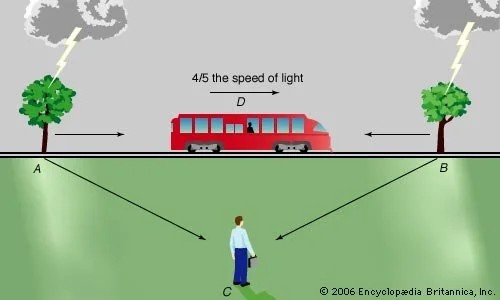
But, as I said earlier, astronauts that have stayed six months on the International Space Station age about 0.005 seconds less than the people on Earth. And the International Space Station goes 17,500 miles per hour, so… true time travel ain’t happening soon. There is most likely an ideal environment for time travel, but it's unclear how we could create that ideal environment or if human beings could even survive it. For one thing, we would need to go as fast as the speed of light, which is impossible enough, and maybe even faster, but since basically nothing can go faster than the speed of light, we can’t really do it at this point.
Time travel is a thing of fiction in the eyes of most, but in a reallllllllllllllllllly long time (maybe in a few million years?) it could be achievable. So if we start looking at physics now, we could help get just a bit further to our goal. Imagine the benefits of such travel. We could send someone from our current time into the future to provide information for historians. People with deadly conditions could be able to get treated with medical advancements far ahead of our time – the possibilities are endless! Now go forth and use this complicated and weird knowledge to help further our understanding of time dilation and time travel.