
by Shivansh Pandey
On November 6, 2025, Nancy Pelosi announced that she would not be seeking reelection and plans to retire at the end of her current term in 2026. For a lot of people, this felt like sad news, and honestly, it makes sense why. Pelosi is one of the most important lawmakers in American history, and watching her step away is not easy. But if we actually care about honoring what she spent her life building, then her retirement should not just be something we mourn. It should be something that motivates us, because America has a real problem with who holds power, and therefore Pelosi stepping back, along with others who have served in Congress for decades, might be exactly what we need to start fixing it.

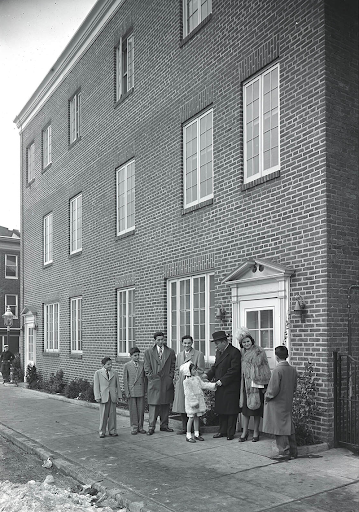
Nancy’s childhood home in Baltimore
Nancy Pelosi was not handed anything. She was born in 1940 in Baltimore, Maryland, into a family where politics was just part of life. Her father, Thomas D'Alesandro Jr., was a congressman and the mayor of Baltimore. Her mother spent her time organizing Democratic women and basically teaching young Nancy how politics actually works. She was the youngest of six kids and the only girl in the family, and even as a child, she was out there helping with her father's campaigns. Growing up like that, she learned early on how to connect with people and understand how political issues affect voters, and those skills made her one of the most powerful people in American political history. After college and marriage, she moved to San Francisco with her husband, Paul, and spent much of her early adult life focused on raising her family. However, she never really let go of her passion for politics. Starting in the 1960s and 70s, she got involved as a volunteer, then a fundraiser, then a party leader. She built her way up slowly, through relationships and hard work, until in 1987 she ran in a special election and won a seat in Congress representing San Francisco.
Once she got there, she did not waste time. During the AIDS epidemic, when most politicians would not even say the word “AIDS,” Pelosi became one of the loudest voices calling for funding and healthcare. She hired a LGBTQ director of AIDS policy to advise her and co-authored the Ryan White CARE Act, which became a key law supporting Americans living with HIV/AIDS. That tells you a lot about who she is: she took on a politically unpopular cause because her constituents needed her leadership. Her career kept climbing from there. In 2001, she became the first woman to serve as House Minority Whip. In 2002, she became the first woman to lead a major party in Congress. And in 2007, she became the first female Speaker of the House, one of the most powerful positions in the United States government. Standing at that podium, she said, "For our daughters and granddaughters, the sky is the limit," and she meant every word of it. As Speaker, she helped pass the Affordable Care Act, which was the biggest healthcare reform since Medicare.
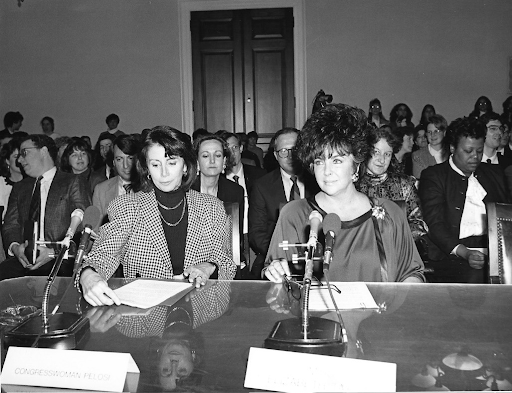
Pelosi (on left), fighting for AIDS rights with Elizabeth Taylor
She fought back against efforts to privatize Social Security, helped steer the country through the 2008 financial crisis, and, under President Biden, helped pass the American Rescue Plan and the Infrastructure Investment and Jobs Act. Even the people who disagree with her politically have to admit she was one of the most skilled lawmakers the country had ever seen. Her retirement closes a huge chapter. But the question now is, who writes the next one?
Pelosi's retirement is happening at a time when America is dealing with something that does not get talked about enough, and that is the fact that many of the most powerful positions in our government are run by people significantly older than the average age of voters. Sociologists call this a gerontocracy, which basically means a political system where elderly people hold most of the power. And right now in America, that is exactly what is happening. The median age of a U.S. Senator is 64.7 years old. The median age of a House Representative is 58.4. The average state governor is 62 years old. Meanwhile, only 18 percent of Americans are over the age of 60, so a small slice of the population is making almost all of the decisions for everyone else.
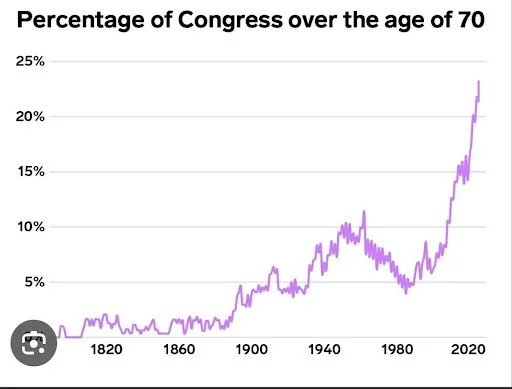
That does not really make sense when you think about it, and young people feel it. The decisions being made right now about student loans, climate change, housing, and technology will affect the next 50 years and beyond, but they are largely being made by people whose lives look nothing like those of the people who will be most affected by them. The cost of living has risen 37 percent over the last ten years, but the average salary has risen only 17.8 percent. Young people are working harder than ever just to survive, paying off student loans, living paycheck to paycheck, and by the time all of that is handled, there is simply no energy left over to think about running for office or getting involved in politics. That is the real trap of gerontocracy. It is not just that older people hold the power; it’s that the system makes it harder and harder for younger people to even try to change that. But here is the thing. Giving up is not the answer, and history actually proves that.
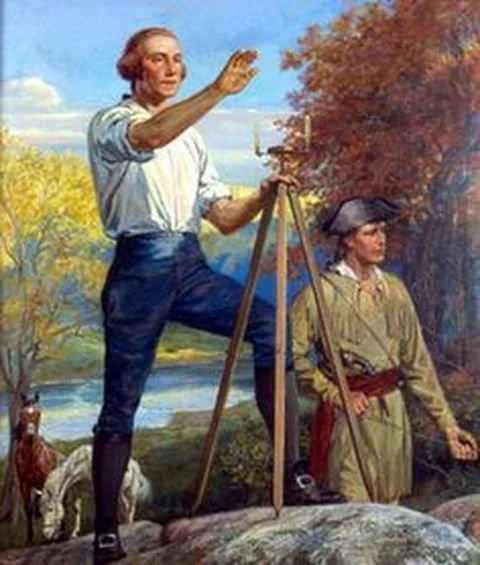
Think about George Washington, and not the version on the dollar bill. The real one. George was born in 1732 into a middle class family in Virginia. He lost his father when he was eleven years old. His peers did not think he was the smartest guy around. But instead of letting that stop him, he put his head down and taught himself geometry, trigonometry, and surveying, which at the time was basically the equivalent of mastering calculus and algebra. By seventeen years old, he had done enough work to land himself the job of official surveyor of Culpeper County, Virginia. That was not a job meant for a teenager. It was not a desk job either. For the next three years, he was out in uncharted frontier land, dragging heavy logs and chains, mapping territory that no one had documented before. Every mile he measured was a record of what he could do. Every year he showed up built onto the last one.
By twenty he was a major in the state militia. By twenty-three, after leading a brutal winter expedition across hundreds of miles to assess French military strength, he was the Commander of the entire Virginia militia. And twenty years after that, he was leading the Continental Army in a revolution, eventually becoming the first President of the United States. The point is not that George Washington was some kind of superhero. The point is that he did not wait for someone to give him a chance. He built a record so undeniable that eventually no one could ignore it. Every responsibility he took on ahead of schedule became the foundation for the next one. Initiative turned into progress, and that progress was real and measurable. Young Americans today have that same ability. The tools look different, the frontier looks different, but the principle is the same. You do not need to be old to handle big responsibilities. You just need to show up and do the work.
Here is the part that I think a lot of people are missing about Pelosi's retirement. Pelosi stepping back is actually one of the most generous things she could do for the future of this country. As critics of gerontocracy allege, one of the hardest things to get older politicians to do is to simply step aside and make room for younger representatives. Pelosi is doing that. She is acknowledging that her legacy does not need her to keep holding the seat in order to assert her power. That is not weakness; that is real leadership. But it only means something if the next generation actually steps up. Pelosi did not become Speaker by waiting around. She volunteered before anyone was watching. She fundraised before she had a title. She built relationships for decades before she ever ran for office. If young people want to honor what she built, they have to be willing to do the same kind of work she did before the cameras showed up. That means voting in every election, especially local ones, because school boards and city councils are where the pipeline starts and those races are sometimes decided by just a few hundred votes. It means actually running for something local, because a young person who wins a city council seat is proof that youth can govern and that argument is hard to dismiss. It means getting involved in campaigns before you ever run yourself, the same way Pelosi spent twenty years building her network before she ever appeared on a ballot. It means pushing for campaign finance reform so that the cost of running for office does not automatically shut young people out. It means showing up to town halls, speaking at public comment sessions, volunteering, and building a visible record of actually caring about your community. And maybe most importantly, it means working with older leaders instead of just being frustrated at them, because the goal is not to remove everyone over 60 from office. Instead, it is to build a system where leadership is earned through merit and not just protected through incumbency. That takes people on both sides of the generational divide being willing to actually talk to each other.
Pelosi spent her whole career in a system that was not built for her, and she changed it anyway. She did not do it overnight, and she did not do it alone. She did it through decades of persistence, preparation, and a refusal to accept that the rooms where decisions were made were not meant for her. That is what she is leaving behind, not just a list of important legislation but a blueprint. And just like Washington proved that a seventeen year old with a chain and a purpose could end up shaping a nation, Pelosi proved that a woman from Baltimore with a passion for public service could end up leading the most powerful legislative body in the world. The next generation does not need to wait for permission. The door is open. The only question is whether we are willing to do what it takes to create meaningful change and impact in a fast-shifting world, and if we are willing to seize opportunities presented to us, the same way the greats in the past did.