
Competitive Clubs at Science Academy
by Ekaterina (Katia) Yershov
Are you looking for an opportunity to discover a new interest or go beyond surface-level knowledge? The Science Academy offers a variety of competitive teams ranging in subject, difficulty, and competitiveness. Through creating an opportunity for students to dive deeper into their passions, these teams help cultivate knowledge beyond the academic curriculum, allowing participants to gain new skills in fields ranging from engineering and robotics to science and humanities. Looking to try something new? These teams are open to students in a number of different grades, providing them with unique learning experiences that can impact their college major or a professional choice. By learning more about these clubs, you may discover something that you are curious to explore!
Speech and Debate
Some of the competitive teams offered are focused around the humanities, such as Academic Decathlon, Ethics Bowl, and Speech and Debate. Through having the opportunity to race against opponents and the clock in a number of structured rounds, Speech and Debate allows high school students to develop public speaking skills that they can utilize throughout their educational and professional lives. Sponsored by the Tri-County Forensic League, these tournaments are composed of multiple rounds, with the topics changing monthly or bimonthly. In order to prepare, debaters must analyze sources, create rebuttals, and potentially draft statements depending on the round.
Each round is structured to include introductory speeches, crossfires (periods in which opponents ask each other questions), and rebuttals (responses to an opponent's argument). A few of the main types of debate utilized are public forum and Lincoln-Douglas. Public forum is composed of two teams of two members debating on a national topic, while Lincoln-Douglas is one-on-one, with a negative and affirmative debater determined by a coin flip. The structure of each round may vary. They can include planned speeches such as Informative, in which participants give informative speeches with the use of prepared graphics; Original Advocacy, where participants give 10-minute memorized speeches; and speeches that are prepared at the competition such as Impromptu events, where participants are given three prompts and expected to prepare and deliver their speech within a time limit of 7 minutes. A round will consist of competitors presenting their speeches to different judges each round, which is why it is critical to be able to adapt your case to the judge.
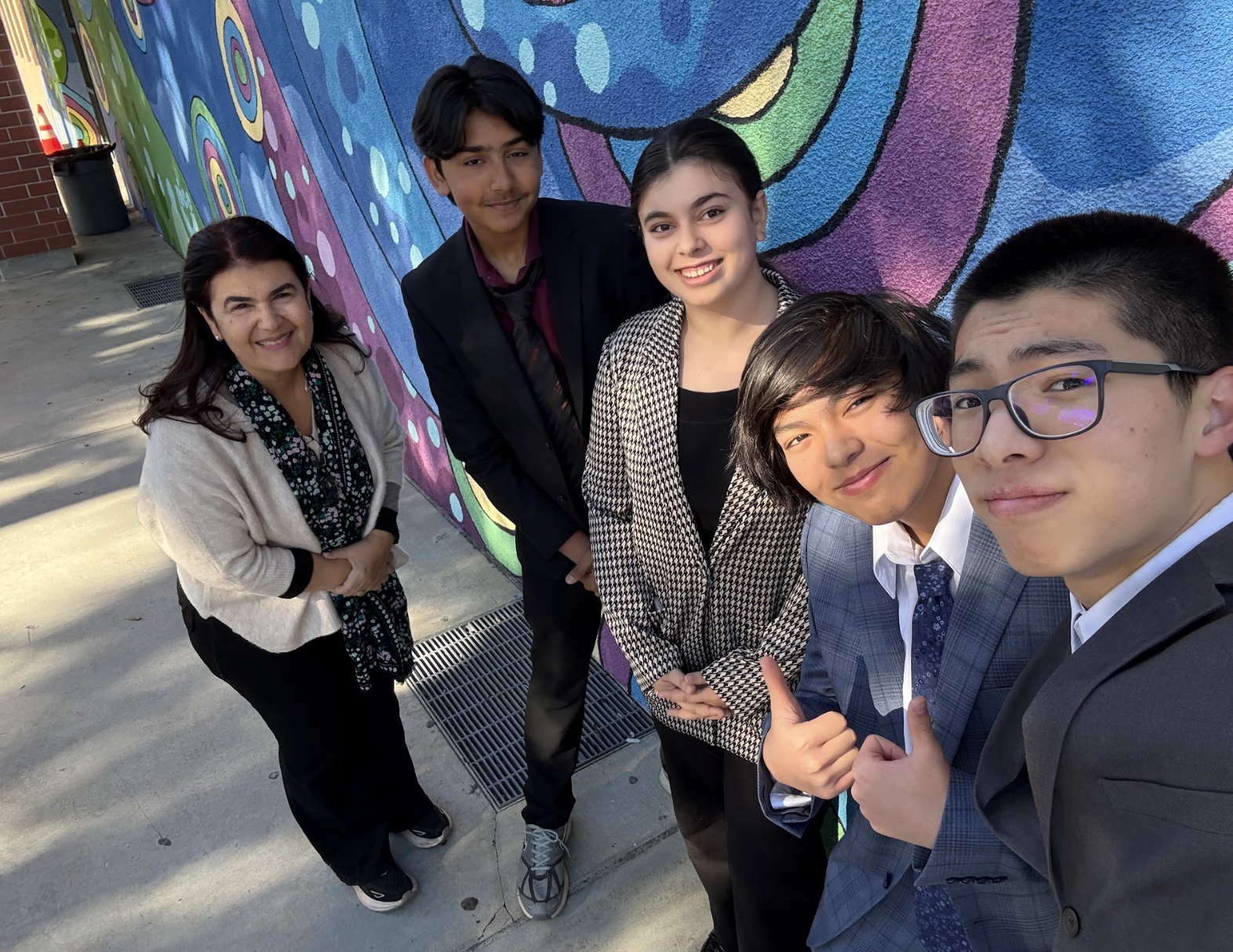
High school Speech and Debate team members (left to right): Shivansh Pandey, Sofia Kirilov, Collin Lee, Samuel Yee Yan Lee at Burbank High School with Ms. DiMonaco for the state qualifier competition. (Not pictured: Naira Badalyan, Charis Kim, Ayan Deshmukh, Kaden Shin)
The Debate portions are scored based on the ability of the debater to respond to their opponents’ arguments and the persuasive manner in which they do so. One piece of advice the co-president of the debate team, Naira Badalyan, offers to incoming students is, “Always respond to all of your opponent’s arguments.” The speeches are scored primarily on how convincing they were in their argument, how well the speaker appealed to emotion, and how compelling and charismatic the speaker was. Therefore, it is critical to come prepared and ready to respond. Before entering the competition, participants must be knowledgeable about their topic and be able to utilize quick-thinking skills. Navigating the points and rebuttals of the competition offers the participants an engaging and competitive experience.
Participation in Speech and Debate can help to foster a sense of confidence in public speaking and creates opportunities for participants to grasp new knowledge while potentially shifting their perspective of a variety of topics. Co-president Sofia Kirilov shared that “Speech and Debate has made professional speaking feel natural by training concise, structured answers under time pressure, which translates directly into interviews. It has also made leading presentations at my robotics volunteering program easier, because explaining complex concepts to beginners is similar to adapting arguments for judges in rounds.”
In order to gain a fuller understanding of the experience, I interviewed co-presidents Naira and Sofia.
Naira Badalyan
How has this competition influenced how you speak in a professional context?
It’s made me far more confident in my public speaking abilities and made me more comfortable with getting caught unprepared. Going up and talking when I have no idea what I’m going to say in ten seconds can be very scary, especially during rebuttal. I’ve learned how to speak confidently even outside my comfort zone, which helps me be more confident during interviews for internships and public speaking for my other extracurriculars as well.
How has acting as the president of the club influenced your speaking and leadership skills?
It’s taught me a lot about organization. This year is my first year as captain, and as our previous captains had graduated, I found myself having to deal with a lot of bureaucracy and registration procedures, along with finding a new sponsor. I’m so thankful to the school administration for all the support, and to Mrs. Di Monaco for agreeing to sponsor us this year! This experience has taught me a lot about perseverance in the face of adversity, and about how important it is to keep everyone on the same page when things can change at any second.
What throughout your experience as the president of high school Speech and Debate has allowed you to acquire skills for your profession?
I’m planning on double majoring in business and a STEM major (still haven’t fully decided which subject), so I know speaking skills and organizational skills will be important for me no matter where I end up. Speech and Debate helped me become a well-informed, confident, and convincing speaker. It helped me learn how to do research on topics I don’t know a lot about. Most importantly, it’s also taught me how to persevere.
Sofia Kirilov
How has acting as the president of the club influenced your speaking and leadership skills?
Acting as co-president has really made me realize how essential clear communication and strong organization are for effective leadership. Coordinating funding, deadlines, meetings, and competition preparation with a large group of members and administrators has been challenging, and I’m incredibly grateful to have Naira as a partner in navigating those responsibilities together. At the same time, managing multiple people who all need help with tasks like case writing or tournament prep has pushed me to prioritize, delegate, and give concise guidance so everyone feels supported and the team can run smoothly.
What throughout your experience as the president of high school speech and debate has allowed you to acquire skills for your profession?
Currently I’m considering a career in intellectual property law, and debate has helped me gain skills that transfer directly, such as building evidence‑based arguments, improvisation, and explaining complex issues in clear language for non‑experts. More broadly, the research, critical thinking, and communication skills you gain in Speech and Debate are highly transferable and valuable in any professional field.
Now that you know how Speech and Debate is structured, you may feel compelled to join the club or maybe you’re curious to learn about other clubs under the realm of humanities. One club which you may have heard about is Academic Decalthalon. Academic Decathlon is composed of a series of seven tests in a number of different subjects ranging from literature to science and math. Participants are able to compete in these tests, each timed within a strict 30 minute limit, with an additional interview and essay for specific regional and national competitions. This year our Academic Decathlon team depicted below at Garfield High School, qualified for Regionals, followed by the Online National competition in which they were able to take home the reins. If you are someone who may be interested in exploring a number of different subjects, you can reach out to Mr. Parks, who would love to have you on the team!
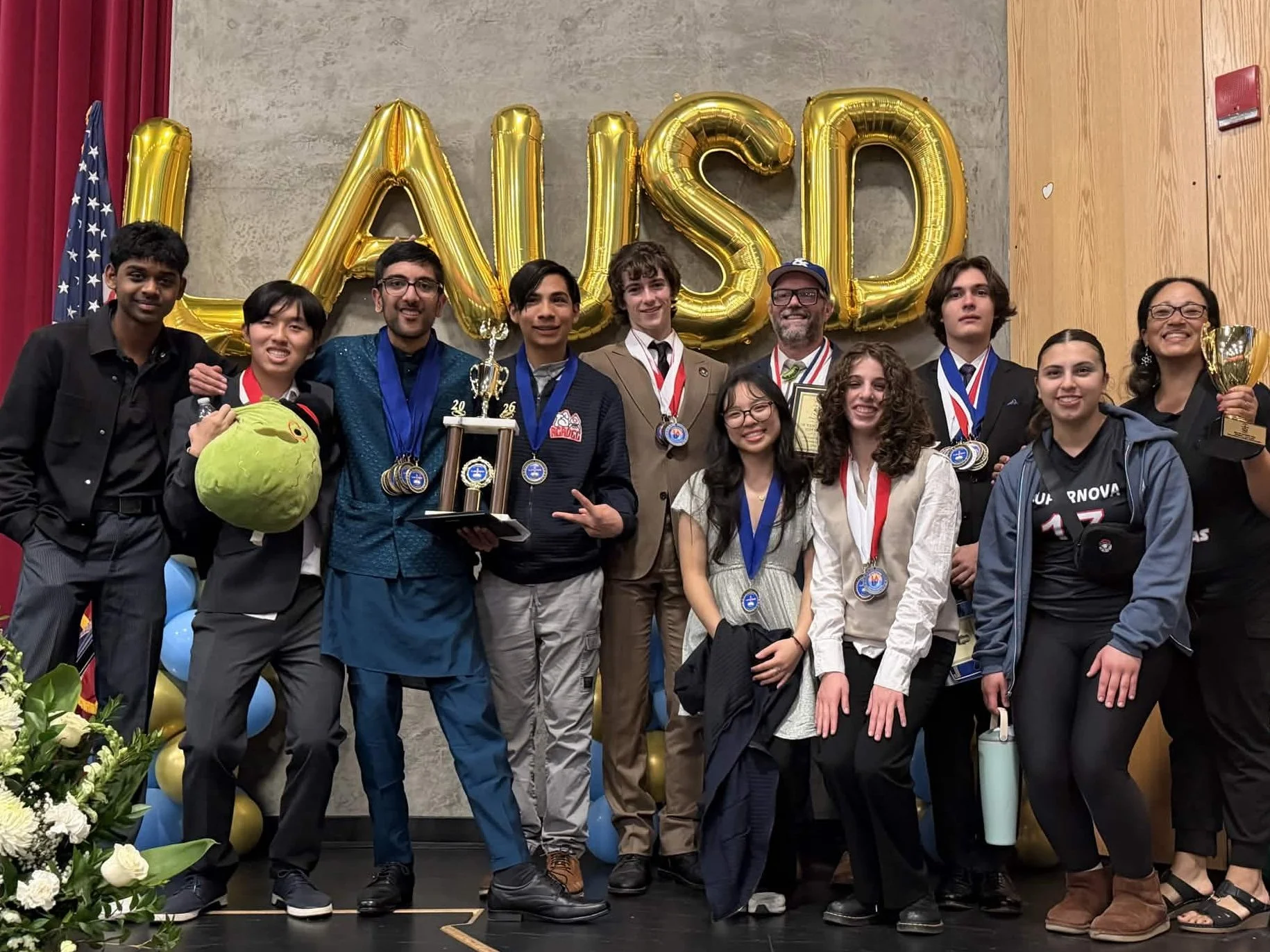
Academic Decathlon Team composed of (from left to right) Ateendra Vishnukanth, John Lee (holding Mr. Pickles), Saket Pamidipathri, Pierce Ibanez, Apollo Colligan, Emily Guo, Team Coach Mr. Parks, Becca Finkelstein, Finn Jasmann, Abby Levy, and Magnet Coordinator Ms. Tanguay, at the awards ceremony qualifying the team for the 2026 Academic Decathlon.
Supernova Robotics
If you are seeking to join a competitive team geared towards STEM, then you might want to check out Supernova Robotics. Focused on robotics and engineering, Supernova Robotics consists of various smaller teams that compete in numerous competitions against other schools around the United States, which can include representing the U.S. in Worlds. In order to prepare for these competitions, the participants dedicate months to building and practicing with their VEX robot, which must complete a specific task such as scoring a plastic ball into a goal. This process begins with using software such as Inventor in order to make a 3D design of the robot using CAD prior to the building and programming of the robot. Supernova Robotics attends competitions throughout the year from September until April. In the midst of this, the teams host a competition known as the Supernova Spectacular, in which teams around Southern California compete. This VEX competition not only supports the club but also allows the school to fundraise in order to continue these programs. The competitions they attend begin with qualifying rounds leading up to Round-of-16, Quarterfinals, Semifinals, and Final matches, which determine the Tournament Champions.
Each tournament consists of six qualification rounds per team. The competition is scored after 2 minutes of the gameplay based on numerous aspects such as autonomous, which take place for the first 15 seconds of a match, and the 1 minute and 45 second driver control section. On the other hand, the structure of this scoring may vary based on the task provided each year. Specifically, this year the task involves inserting their scoring blocks, each worth 3 points, into tubes while also knocking out the opposing teams blocks. However, the tasks range year to year, which allows the competitors to continuously gain new skills. Besides taking part in competitions, Supernova Robotics spends months preparing for the competition they will be hosting. The initial preparation involves logistics as the teams build their robotics with hopes of succeeding. The President of the Club, Shivaan Nigam, states that “to excel at robotics competitions, a team must be consistent in all aspects, or really incredible at one.” Being consistent requires constant building, optimizing, and practicing.
Through taking part in this program, individuals shared that Supernova Robotics has allowed them to learn and grow. When asked what benefits his experiences have allowed him to acquire, Shivaan detailed that, “Throughout my time in the club, I have made a lot of connections. As a competitor, I’ve met teams from San Diego all the way to Taiwan. I’ve been able to leverage connections to increase success, which has been an important skill for me to learn. In addition, I have really learned how to interview and convey information, which is an important aspect of the robotics judging process.” If you are seeking to join a club focused on engineering, robotics, and competition, Supernova Robotics–as well as FRC (First Robotics Competition), which manufactures their own robots–provide the opportunity for students to engage within these fields to develop life-long skills they can incorporate throughout their academic and professional careers.
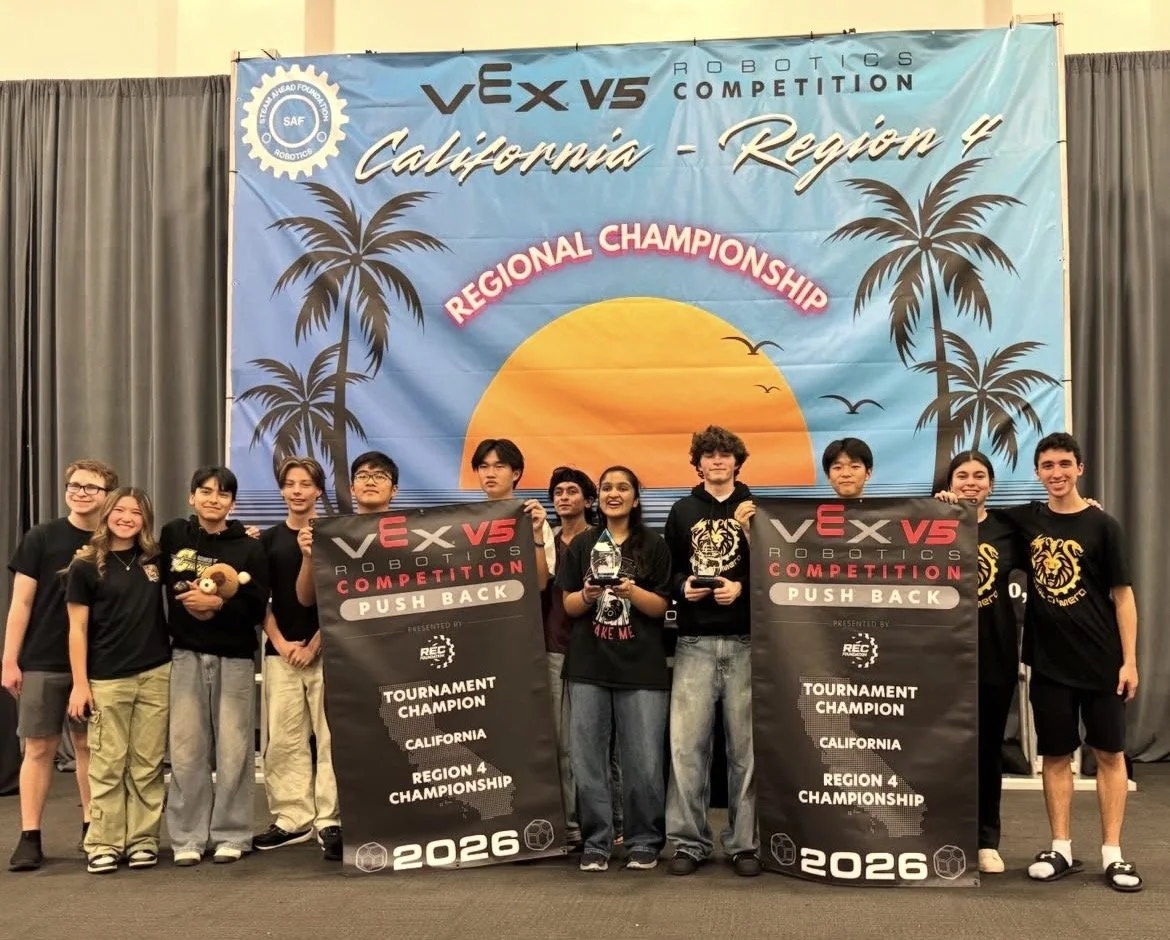
Team 334C (Supernova Chimera) and their alliance 15442a Capybara, the 2026 California Region 4 Tournament champions
Biology Olympiad
Biology Olympiad is one of several science-based clubs, and it consists of individuals who are interested in becoming eligible to compete in the United States Biology Olympiad (USABO), which is administered by the Center for Excellence in Education. The USABO provides students with the opportunity to expand their knowledge beyond AP Biology through curricular resources, training, and encouragement. Through participating in this competition, students take part in two online tests leading up to the 20 top scoring U.S. students being invited to a 12-day residential training program in which they compete in finals consisting of two tests, 6 hours in length, as well as attend a variety of lectures and field trips led by university professors and experts. Bringing the students hands-on lab experience, this program progresses and prepares students for the USABO National Finals, which lead up to the International Biology Olympiad. In the Biology Olympiad club offered at Science Academy, students spend months preparing and studying for this intense test, which will determine whether they progress to the semi-finals and finals.
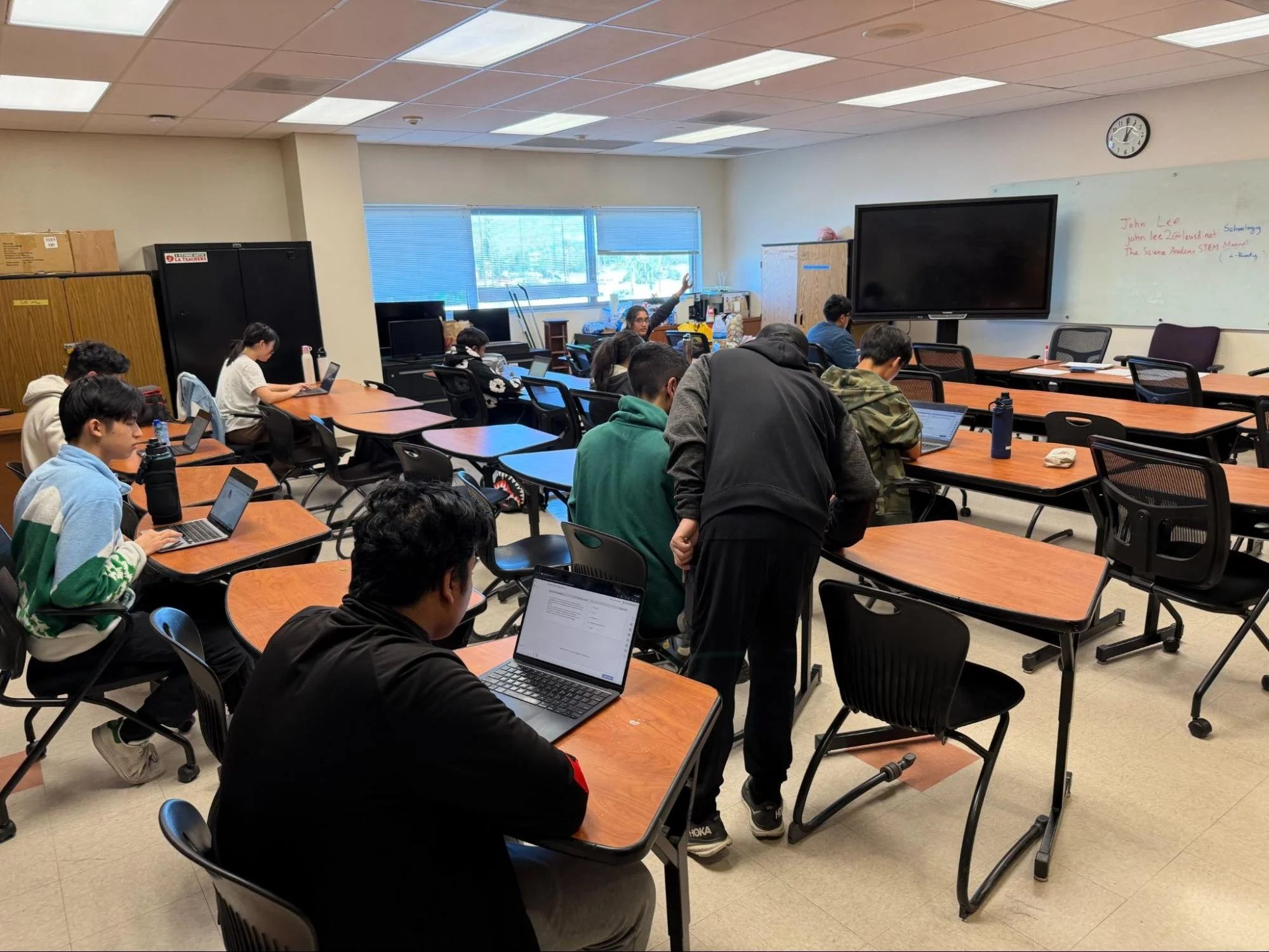
Biology Olympiad members taking the on-line USABO exam. The following members qualified for the semi-final round: Kayla Lee, Saket Pamidipathri, Sean Yeh, and Eric Chung
President of the Biology Olympiad club, Ryan Lee, has detailed that Bio-Olympiad has not only allowed him to expand his knowledge of biology, but it has also cultivated his passion for the subject and driven him towards exploring deeper within this field, as seen in his responses below.
Question: How has the information you have acquired through participating in this competition impacted you as an individual?
I definitely look at myself and the world around me in a different light. Consider, as an example, mushrooms. They’re actually reproductive structures, so despite being nutritious, they are a bit weird to “swallow”. While most of us see objects as “dirty” or “clean”, I see them on a spectrum, considering bacteria and other infectious vectors are everywhere. It’s like opening a Pandora’s box, but it’s the toll I pay for knowledge. One concept starts explaining another, and I sort of learned to see the world in that way, that there’s always a new perspective to find. While I have certainly explored the concept of living organisms, it’s inevitable to note that biology is just applied chemistry, which is just applied physics, which is just applied mathematics.
Question: How has being the president of this club impacted you in a leadership aspect?
It’s difficult, especially after crippling senioritis (and junioritis, and sophomoritis, and freshmanitis). I started this club to create a space for “Bio people” to congregate and enjoy Biology, considering our school is pretty engineering focused. Being the change that I wanted at The Science Academy was an excellent exercise in personal development.
Question: What throughout your experience in the Biology Olympiad has impacted you and allowed you to acquire skills that you can use throughout your profession?
My journey with Biology initially began during my 7th grade year during COVID. I was initially disinterested in Biology but while studying for it before the class, it kind of pulled me in! I dug in deeper than what the curriculum offered (especially beyond cellular organelles or cellular respiration/photosynthesis), first by finishing Campbell’s Biology and then moving on to other, more specialized textbooks. I learned about the Biology Olympiad at this time, and so I prepared myself especially for that competition.
I think the major shift happened around my freshman year, when I was studying biotechnology and its associated tools. I really wanted to experience biology in my own hands, so in my sophomore year, I cold-emailed a lab and got in! I learned how to pipette, use sterile techniques, gas lines, and other specialized equipment and procedures correctly. While I have done significantly more beyond this, it paved a foundation for any future wet-lab research work that I want to do.
For more information: check out USABO’s website
The various competitive teams offered at The Science Academy have created a space which has fostered a sense of curiosity and a depth of knowledge, while allowing like-minded students to join together in persevering and growing within their chosen passion, or allowing them to discover a new one. If you’re interested in the field of Humanities, you may want to look into joining High School Speech and Debate, Ethics Bowl, and Academic Decathlon. If you seek to use your knowledge to innovate, create, and engineer a robot, you might consider joining Supernova Robotics or FRC. If neither of these are what you are seeking, there are a variety of science and math clubs offered such as Math Counts, Science Bowl, StellarXplorers, Biology Olympiad, Physics Olympiad, Chemistry Olympiad and Science Olympiad. Cultivating a space where students can thrive together has been one of the founding visions of the Science Academy, which continues to grow and expand through these clubs and programs.
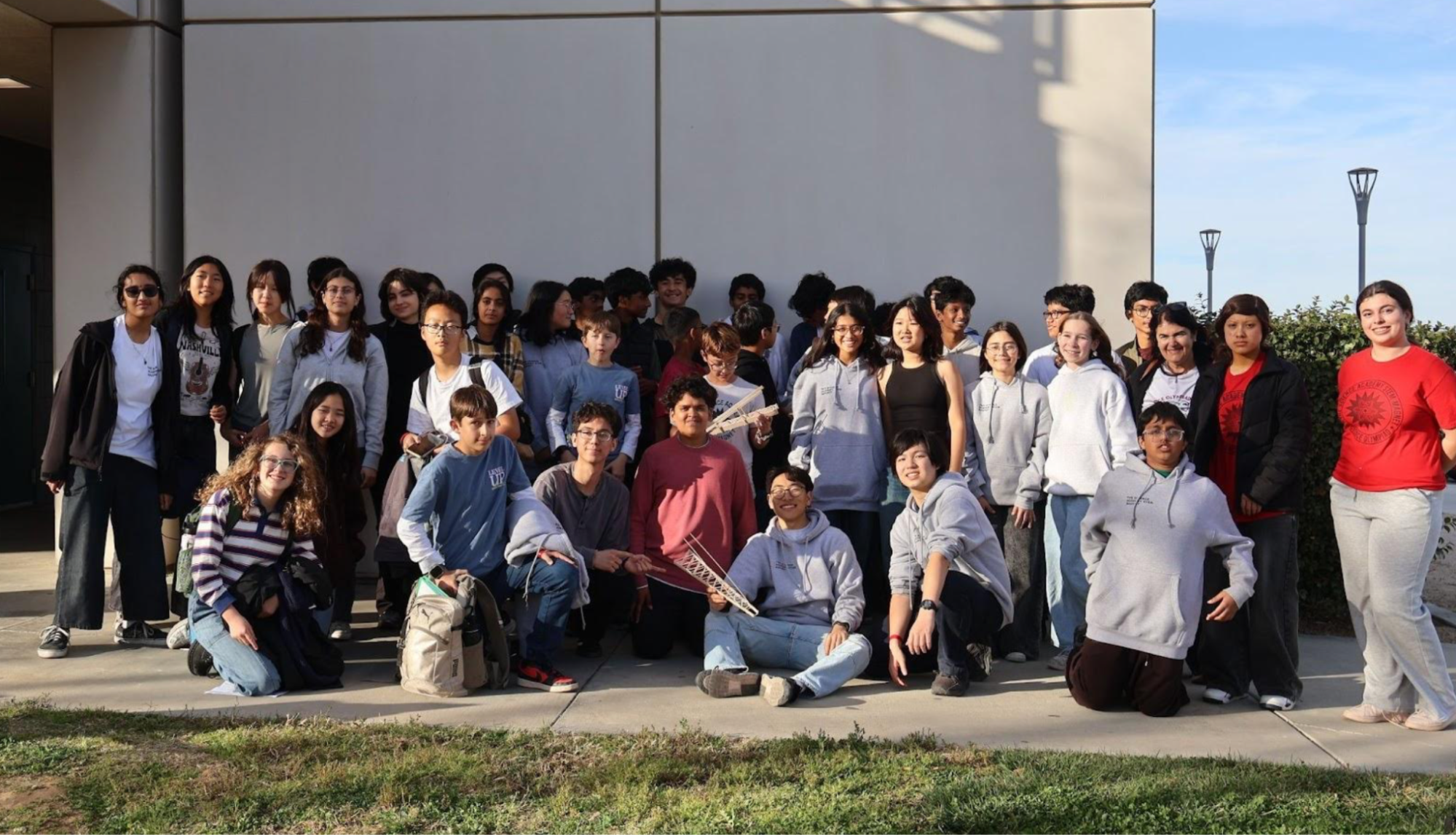
Science Olympiad team of high school and middle school students at the regional competition located at Antelope Valley College on February 14, 2026
