
Digital Brains - Fact or Fiction?
by Riyan Khadka, with editorial support by Ava-Ray Pributsky
Having artificial intelligence simulate a living organism seems like science fiction, doesn’t it? In fact, it is already starting to become a reality, and very quickly, too. Sam Fatemanesh, a former student of The Science Academy STEM Magnet, took an idea he started working on at Caltech and is now developing it in a private lab called Cognitogram Labs in Palo Alto. Along with a team of fellow researchers, he trains an artificial intelligence by using the neural activity of zebrafish larvae. This larva is just 4 millimeters long with only 100,000 neurons, which is rather low compared to other animals; even flies have more neurons than that. The larvae have clear bodies, which is extremely helpful because it provides a window to its organs. Through their experiments, they have created a sort of “digital fish brain,” producing terabytes of information that are then compressed into gigabytes and loaded into an AI. The AI analyzes the data and teaches itself the fish’s neural activity, making a whole brain emulation of the zebrafish. This process can be used to understand how brains work and lets researchers watch how the neurons are activated from different stimuli in the AI emulation. This digital clone can then be used to test the brain and discover how the neurons respond when exposed to different stimuli.
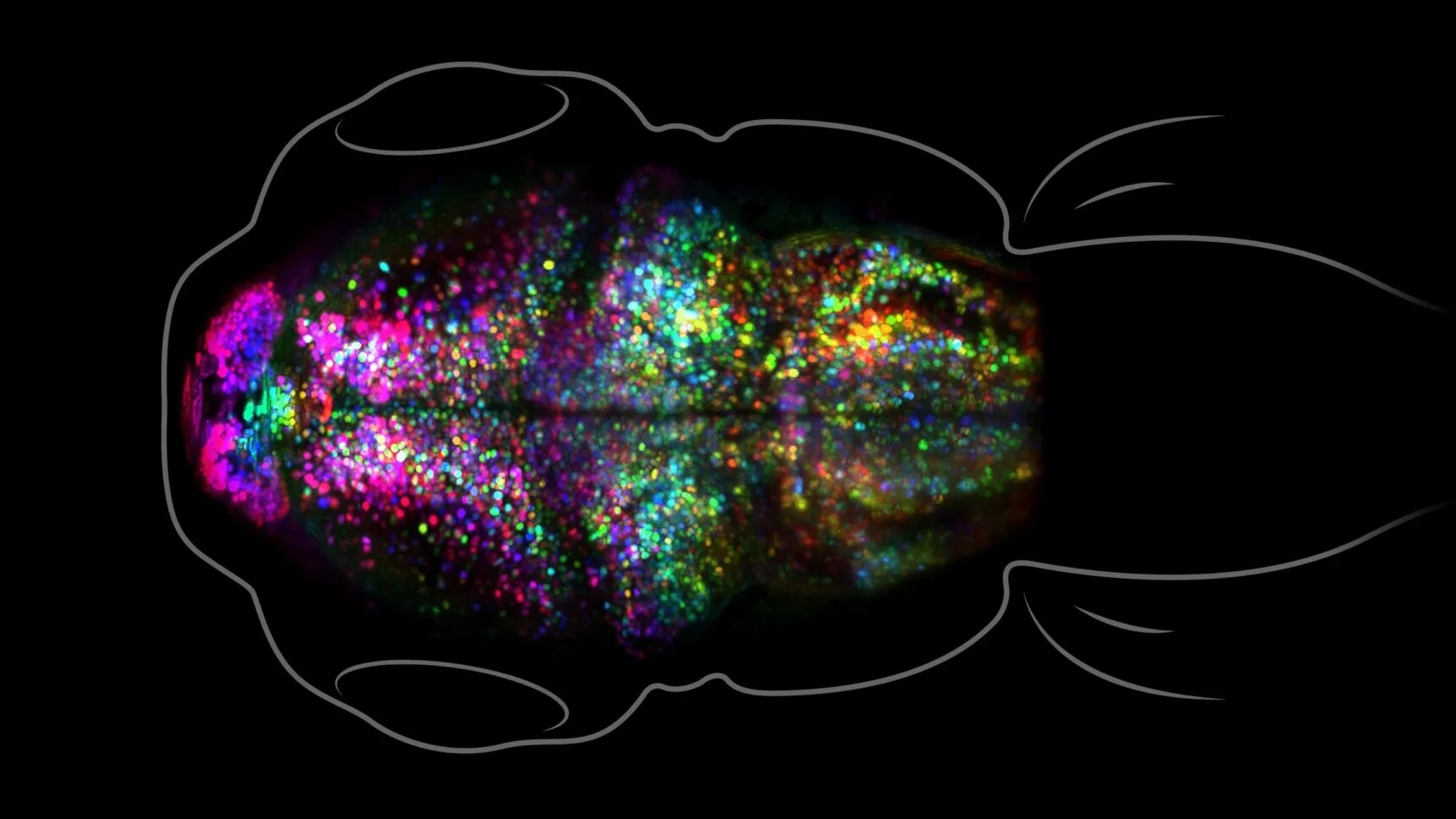
The brain of a 7-day-old zebrafish larva glows with fluorescent markers that were genetically engineered to illuminate its neural activity
Let’s dive into the nuts and bolts of this process. Sam Fatemanesh and his team begin by making a recording of the fish’s brain through the use of calcium imaging techniques. This process uses genetically modified neurons inside the fish, which are essentially little proteins that glow when the neuron is activated. The researchers record brain activity by scanning the brain with two lasers across a movable plane. They then feed these recordings to an AI model, training it to imitate the fish’s brain activity. This AI is hungry for information: for every hundred thousand neurons, the technology produces multiple gigabytes of information; that’s about 50 zebrafish larvae loaded on your smartphone. For comparison, the human mind with 86 billion neurons would need roughly three thousand smartphones to store all the data. By developing this new AI model, future scientists will no doubt discover more of the complex mechanisms of the brain.
For further details on Sam’s project, check out the full paper entitled “A Sensing Whole Brain Zebrafish Foundation Model for Neuron Dynamics and Behavior.”
I reached out to Sam with some questions about his zebrafish research. He is currently on sabbatical from Caltech to devote himself full-time to this scientific investigation and plans to return in 2027 to finish his degree, but despite his very busy schedule, he was gracious enough to reply.

Science Academy graduate Sam Fatemanesh visiting MIT last winter
Q: What is your goal for this project?
A: My goal is to create virtual brains that can serve as tools for neuroscience research, allowing for faster experimentation and discovery of brain dynamics. I started thinking about this idea around the time I began my research in whole brain modeling, probably around this time last year [late 2024].
Q: How could this research help the scientific community, as well as humanity as a whole?
A: The uploads have various downstream applications. By investigating the model itself as a surrogate brain, one could identify various laws of brain dynamics. The model also serves as a virtual “test bed” which neuroscientists could run experiments on much faster than they could in biological zebrafish.
Q: How do you feel about your work?
A: I feel pretty good about the work; it’s exciting to see the potential applications. I can foresee two outcomes: one short-term and one long-term. In the short term, the primary application is in helping pharma companies test virtual drugs. Testing neurological drugs on real zebrafish or mice is costly, but using virtual brain models will allow for the testing of millions of drugs at very low cost. In the long run, the ultimate goal is to enable human mind uploading, which entails vast rewards and consequences such as endowing the human mind with new capabilities as well as potentially escaping physical death.
Check out the website that Sam and his team developed, which features a live simulation of a larva’s brain here. It actively loads up individual neurons as colored dots and shows them as they activate.
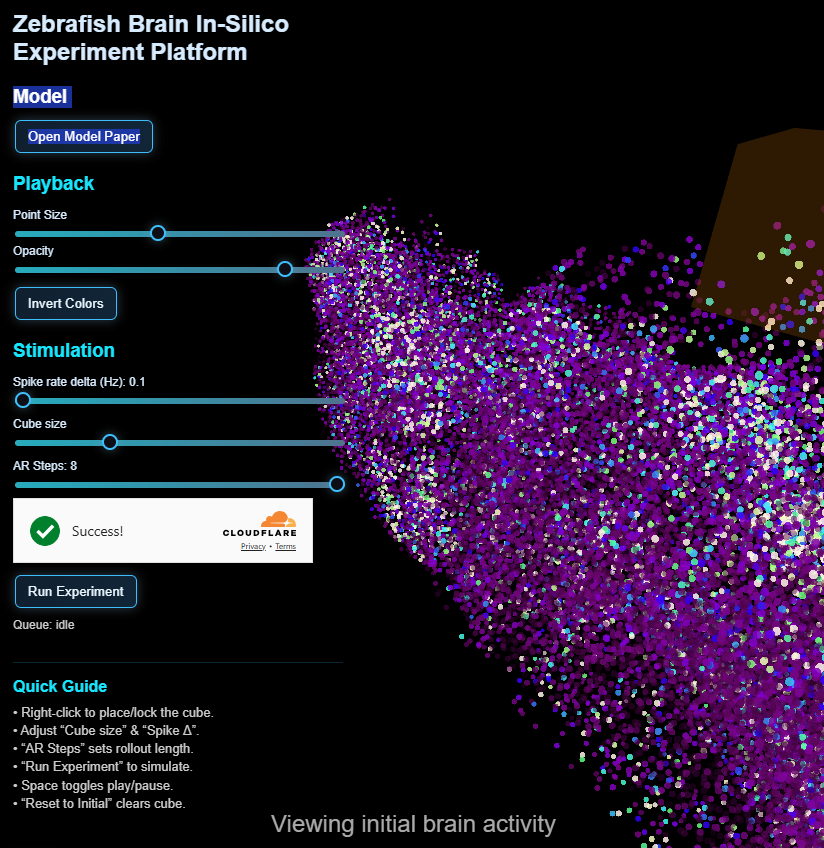
The work of Sam Fatehmanesh and his team could very well help us discover the algorithms our brains use to process sensory information, generate complex thought, and develop memories, as well as assisting fellow neuroscientists to more effectively work on a wide-range of experiments and research. This is mind-blowing research, developed by one of our very own Science Academy Supernovas!
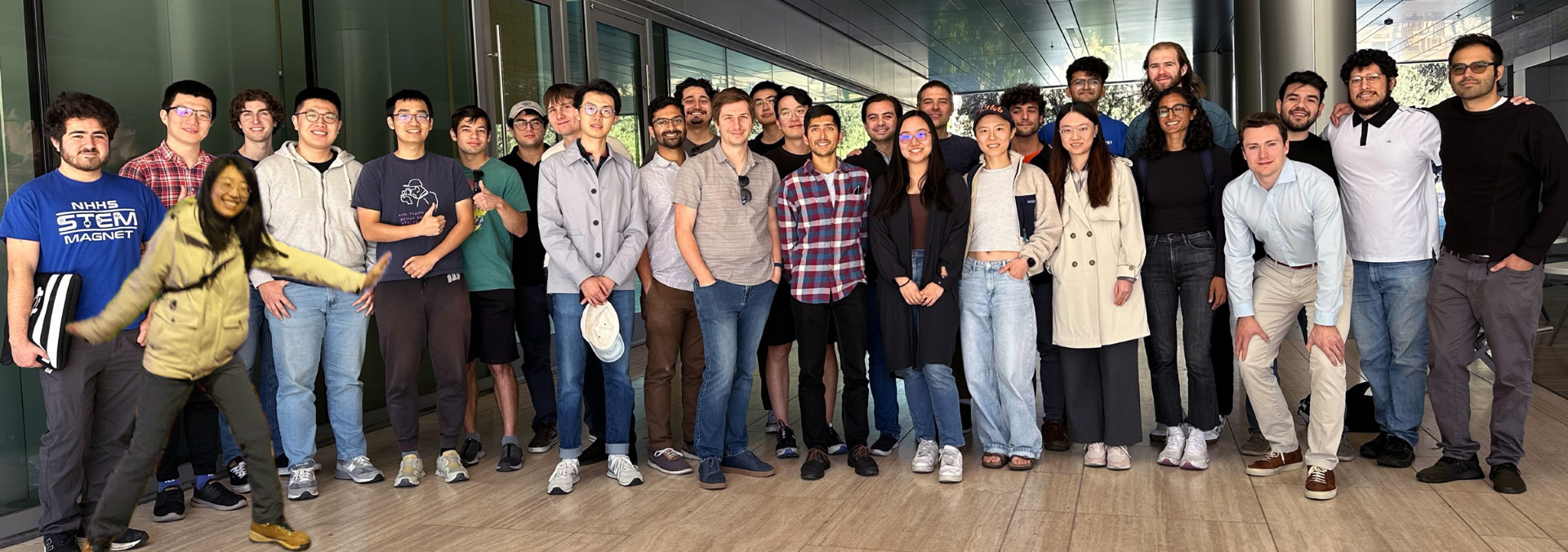
The research team at Thomson Lab at Caltech (Sam is on the far left)
